Menu

It has been nearly 30 years since the McDonald’s hot coffee lawsuit went to court, but interest in the case remains high. People around the world dismissed the lawsuit as “frivolous” and a prime example of runaway juries. A look at the facts of the case, however, tell a different story.
Despite what most people think, plaintiff Stella Liebeck, a 79-year-old grandmother, was not driving when the coffee spilled. She was a passenger in her grandson’s car. As the car was parked, she tried to hold the cup securely between her knees while removing the plastic lid. However, the drink tipped over, spilling scalding hot coffee all over her lap, according to the Texas Trial Lawyers Association.
Here is some of the evidence presented to the jury:
It was company specification to sell their coffee at temperatures of 180 to 190 degrees Fahrenheit.
McDonald’s coffee, if spilled, causes full thickness burns (third-degree to the muscle/fatty tissue layer) in as little as two seconds. According to the U.S. Consumer Product Safety Commission, an adult can suffer third-degree burns after being exposed to 150-degree water for two seconds.
Ms. Liebeck was hospitalized for eight days and had to undergo a variety of procedures including skin grafting and whirlpool treatment for debridement. She also suffered permanent scarring as a result of the burns, as well as disability for over two years.
From 1982 to 1992, there were more than 700 reported claims to McDonald’s of people suffering severe injuries from their hot coffee, including burns to the genital area, perineum, inner thighs, and buttocks. It was not only adults that were injured, but also infants and children.
Despite knowing the risk of harm, McDonald’s testified – through its own witnesses – that it did not intend to turn down the heat and it did nothing to warn consumers about the dangers.
A quality-control manager testified that not only were consumers unaware of the risk, but that consumers would not anticipate such severe burns if coffee was spilled.
At trial, the fast-food giant admitted that the drink was “not fit for consumption” as sold because of the scalding hot temperature and risk of injury to the consumer. The jury agreed, finding that the coffee was “unreasonably dangerous” and was sold in “breach of the implied warranty of fitness.”
McDonald’s initially refused to settle the case. Eventually, a jury would award the plaintiff $200,000 in compensatory damages (reduced by 20% as she was found to be partially at fault for her injuries) and $2.7 million in punitive damages.
Punitive damages were later reduced by a trial judge to $480,000; however, the parties agreed to a “post-verdict settlement.” The confidential agreement prevented further appeals, which could have taken years to resolve.
The Court refused to grant McDonald’s request for a new trial. The Judge found the chain’s conduct regarding the sale of scalding hot coffee and failure to warn customers about the risk of harm if spilled was callous. For ten years, McDonald’s had seen hundreds of reports of customers receiving third-degree burns after spilling coffee, but they did nothing. Injuries included burns to the “genital area, perineum, inner thighs, and buttocks.”
According to Ms. Liebeck’s treating physician, the 79-year-old’s burns were some of the worst scald burns he had ever seen.
News headlines often spin lawsuits as being frivolous or juries as runaway. However, every case has its own facts and evidence serving as the basis for how a specific verdict or settlement is reached. The judge and jury are presented with all of the evidence, testimony, and law in a case. They are the fact-finders and decision-makers after weighing all of the evidence — evidence and facts that are often not known to the public or reported in news headlines.
The McDonald’s hot coffee case involved far more than what most people realize. There are always two sides to a story and the McDonald’s jury heard both before reaching their verdict. And, ultimately, the case was instrumental in eventually changing how coffee is served, including improved lids, insulated sleeves, and safer temperatures for consumers.

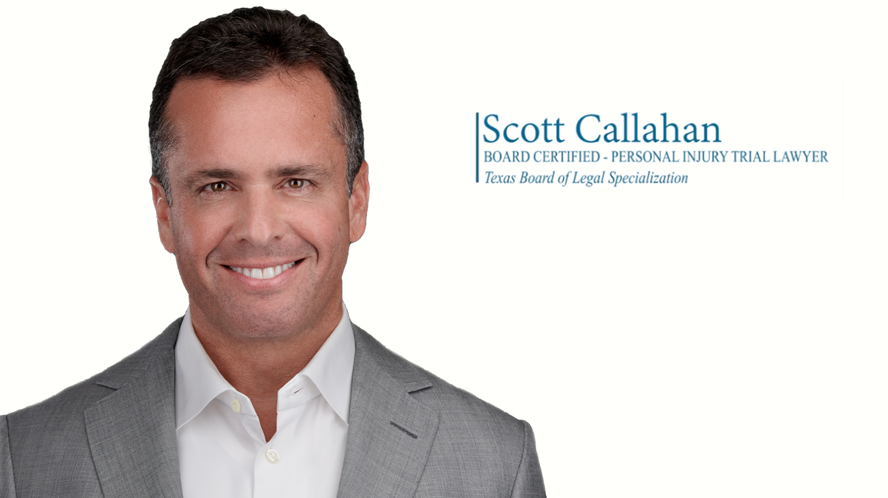
Scott Callahan & Associates is proud to announce that founder and lead trial attorney Scott Callahan has been named to Texas Super Lawyers® for the 10th consecutive year. The honor is given only to the top 5% of attorneys in a state.
The experienced lawyers at Scott Callahan & Associates represent people and their families in serious injury and wrongful death cases. We have recovered millions in verdicts and settlements on behalf of our clients. Contact our office today for a free consultation.
Super Lawyers® is an attorney rating service that recognizes attorneys for their “high degree of peer recognition and professional achievement.” In addition to naming a select list of “super lawyers” in each state, they identify rising stars. Rising star candidates must be under 40 years old or in practice for ten years or less.
Attorney Scott Callahan was first recognized by Texas Super Lawyers® as a Rising Star in 2011. Only 2.5 percent of attorneys in the state are named to the Rising Star list each year. Since receiving that initial honor, he has been selected as a Texas Super Lawyer every year.
The rigorous, patented selection process involves peer nomination, independent research, and peer evaluation. Independent research is based on the assessment of 12 indicators of professional achievement and peer recognition, including:
In addition to being recognized by Texas Super Lawyers® for over the past decade, Mr. Callahan is also board-certified in personal injury trial law by the Texas Board of Legal Specialization. For over 25 years, he has been helping injury victims throughout Texas and nationwide.
Mr. Callahan is honored to be a member of the Multi-Million Dollar Advocates Forum as well as a graduate of Gerry Spence’s Trial Lawyers College. He has dedicated his career to helping those who have suffered severe, catastrophic injuries due to negligence, carelessness, or wrongdoing.
If you have been seriously injured, you need an experienced attorney who will give you the aggressive, ethical, and professional representation you deserve. At Scott Callahan & Associates, we believe that injury victims should be heard. Whether you were injured in a car accident, on the job, or by a defective product, our firm can help.
Contact our office at (713) 888-9000 or fill out our online contact form to speak with an attorney. Receive a free, confidential case evaluation to determine your legal options and your right to recover damages for your injuries. We are available 24 hours a day, 7 days a week to discuss your case. There are no fees unless we win. Call today.

Lawyers get a bad rap. There are probably more jokes about unethical lawyers than there are about any other profession. The funniest part is that, unlike most other professions, lawyers are bound by a code of ethics. A violation of the rules of professional conduct can result in the attorney getting disbarred.
In a society based on rules and regulations, lawyers and, more specifically, trial lawyers play a critical role in keeping society functioning. Trial lawyers protect people, hold greedy corporations accountable, and shed light on grave injustices.
Here are 10 ways trial lawyers helped make the world a safer place:
1. TAKATA AIRBAG RECALL
Takata airbags containing a deadly design defect with the airbag inflator were installed in approximately 67 million vehicles. Studies show that airbags with this flaw were prone to exploding due to long-term exposure to high heat and humidity. Through litigation, it was revealed that the company knew about the issue for years before a recall issue.
Trial lawyers not only obtained hundreds of millions of dollars on behalf of victims injured or killed by the airbags, but they also helped to initiate one of the largest auto parts recalls in American history. The recall has likely saved thousands of people from serious injury or death.
2. FEN-PHEN LAWSUIT
An estimated 6 million people took the American Home Products Corporation diet pill “Fen-Phen.” The drug was marked as a miracle pill for obesity. By September 1997, the drug was pulled from the market after studies showed a link between the use of the diet pill and heart valve damage.
Litigation against the makers of the drug eventually resulted in a $3.75 billion settlement, one of the largest of its kind. Thousands of people received compensation for their Fen-Phen- related injuries because of the work of trial lawyers.
3. FORD-FIRESTONE UNSAFE TIRES
Over 200 deaths have been linked to Firestone tires that were installed on Ford vehicles. Product liability lawsuits as early as the 1990s produced evidence showing that the tread would separate on factory-installed Firestone tires on Ford Explorers. The tire failure made the Explorer more likely to roll over, resulting in injury and death. The lawsuits not only helped to prompt awareness about the dangerous defect but also led to multiple congressional hearings and a lifesaving recall of the tires.
4. ENRON WORKERS/RETIREMENT MONEY SETTLEMENT
When the Enron Corporation declared bankruptcy in 2001, tens of thousands of employees were left in financial ruin, devastated by the sudden, unexpected collapse of the company. Little did they know that the company’s downfall, a company once hailed for its innovation, was of its own doing.
A class-action lawsuit helped to recover hundreds of millions for employees that lost their retirement plan overnight. The suit resulted in the “largest settlement in a 401(k) case involving company stock,” according to reporting by the Wall Street Journal.
5. CHEVROLET CORVAIR CAR
The Chevrolet Corvair was originally touted for its innovative, compact design. One of the most distinct features was that the luggage compartment was located in the front of the vehicle, not at the rear.
The rear-engine design is believed to have made the vehicle less stable, more susceptible to rollover or loss of control. The car stopped being produced after 1969 and was formally recalled due to the potential for a carbon monoxide leak from its heater.
6. 3-WHEEL ATV LAWSUIT
Trial lawyers helped to get dangerous and deadly three-wheel ATVs banned from the market. The unsteady vehicles (Honda three-wheel ATCs) were responsible for over 300,000 injuries and 1,000 deaths in the 1980s. Litigation proved that the vehicles contained a design defect and helped individuals and their families who were injured or killed by the vehicles recover millions.
7. POLYBUTYLENE PIPE LAWSUITS
A 1995 class-action lawsuit resulted in a $950 million settlement against Shell Oil Co. for faulty polybutylene plastic plumbing. The company, one of three, developed and produced pipes that were prone to leakage or would burst over time. Additional class action lawsuits have since been filed to help homeowners who have sustained substantial damage
8. DALKON SHIELD CONTRACEPTIVE
The Dalkon Shield was an intrauterine device (IUD). The contraceptive was hailed as a safe alternative to birth control pills in the early 1970s. Not long after emerging on the market, researchers began to see links between the device and severe infection, infertility, and pelvic inflammatory disease. Trial lawyers were able to prove that the device was unsafe and multi-million dollar verdicts on behalf of those injured by the device.
9. FORD PINTO GAS TANK LAWSUIT
The Center for Auto Safety noted that 1.5 million Ford Pintos were recalled due to a fuel tank design defect, which made them prone to catching fire if involved in a rear-end collision. At the time, a lawsuit against the company resulted in a verdict with the largest punitive damages ever awarded by a California jury.
10. POST 9/11 LITIGATION
The events of 9/11 forever shook our country. Countless lives were lost or affected by the devastating attacks. Post 9/11 litigation helped to secure compensation for those that lost loved ones, suffered injuries, or had property damage as a result of the terrorists.
Trial lawyers work tirelessly for those injured as a result of another person’s negligence. They are dedicated, compassionate individuals who focus on bringing justice and equity to people who may otherwise not be heard.
Certainly, not all trial lawyers are above the fray, but for the vast majority, arguing in court is merely scratching the surface of what they do and how they can help.
Scott Callahan is a Texas trial lawyer who specializes in catastrophic injury and wrongful death cases. He is board-certified in Personal Injury Trial Law by the Texas Board of Legal Specialization. Located in Katy, TX, Scott represents clients throughout Texas and nationwide. Learn more on Scott Callahan’s profile.